When the Wi‑Fi drops in a full restaurant:how I built Order Experts
No internet, Wi‑Fi that drops and thermal printers that don’t speak Greek: how I built Order Experts and what changed once it went into its first restaurant.


In this article· 7 sections
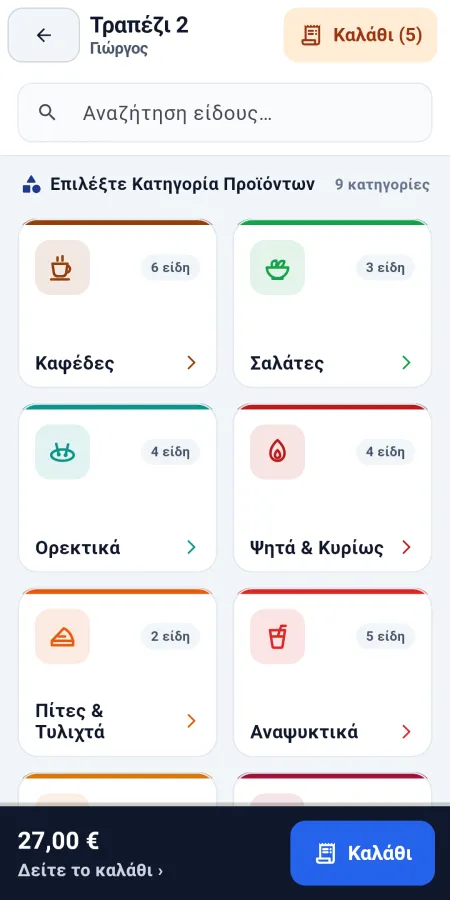
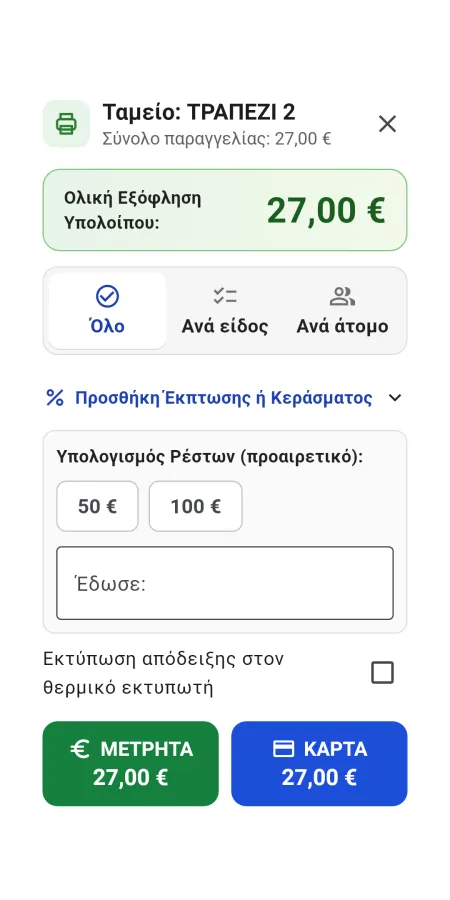
In a busy restaurant nothing waits. The waiter takes the order, the kitchen has to see it immediately, and the till has to know at every moment what each table owes. Order Experts was built for exactly that: order-taking from the phone and a till for cafés, tavernas and restaurants.
The hard part wasn’t the screens, though. It was everything that can go wrong in a real dining room.
The dining room runs without the internet
The first decision was also the most important: the system doesn’t depend on the internet. A Windows PC or an Android terminal becomes the till and, at the same time, the shop’s server. Waiters’ phones talk to it over the local Wi‑Fi.
The phones find the till on the network by themselves, so nobody types IP addresses. Each one pairs once with a temporary 6-digit code. Behind it sits an X25519 key exchange, and from then on every order travels encrypted with AES‑256‑GCM. Data lives in a local SQLite database in WAL mode, so a power cut doesn’t corrupt anything.
If the internet goes down in the middle of a Saturday night, the dining room doesn’t even notice.
The restaurant’s network
- Waiters’ phonesfind the till on their own and send every order encryptedLocal Wi‑Fi
- Till and server in onea Windows PC or an Android terminal, with a local SQLite databaseLocal
- Thermal printerskitchen and bar, so they see the order immediatelyLocal
- Cloudupdates and, when the owner allows it, remote supportInternet
When the Wi‑Fi drops mid-order
A dining room’s Wi‑Fi is never perfect: walls, a kitchen, a terrace, dozens of customers’ phones. The worst case is a payment being sent, the reply getting lost, and the waiter tapping again. That must never mean charging twice.
The answer was discipline on every action:
- Every payment, void, discount and move carries a unique retry key. If it arrives a second time, the till recognises it and doesn’t run it again.
- Every cart line has a stable ID, so an item that has already arrived is never printed in the kitchen again.
- Failed prints retry on their own as soon as the printer is back, before any new ticket.
- When the till restarts, phones reconnect quietly instead of sending the waiter back to the PIN screen.
To make sure all this holds, I wrote 25 scenarios from real shifts, and they run automatically on every change.
Greek on every thermal printer
The thermal printers out there are all sorts: expensive, cheap, old, without a Greek font. Order Experts supports the Greek code pages (CP737, CP1253, ISO‑8859‑7) and, where a printer lacks them, prints the receipt as an image. That way Greek always comes out right on any printer, on 80 or 58 mm paper.
The most useful lesson came when the system was set up in its first restaurant. The kitchen ticket was rewritten around how the cook actually reads it. Small details, but in a full restaurant they prevent mistakes.
- The confusing “+ No onion”
- Greek capitals with accents
- One cancellation ticket for every item
- The table in large type, items in menu order
- “- No onion”
- Greek capitals without accents
- One cancellation ticket per printer when a whole order is cancelled
- A “TAKEAWAY” header for takeaway orders
A menu waiters understand
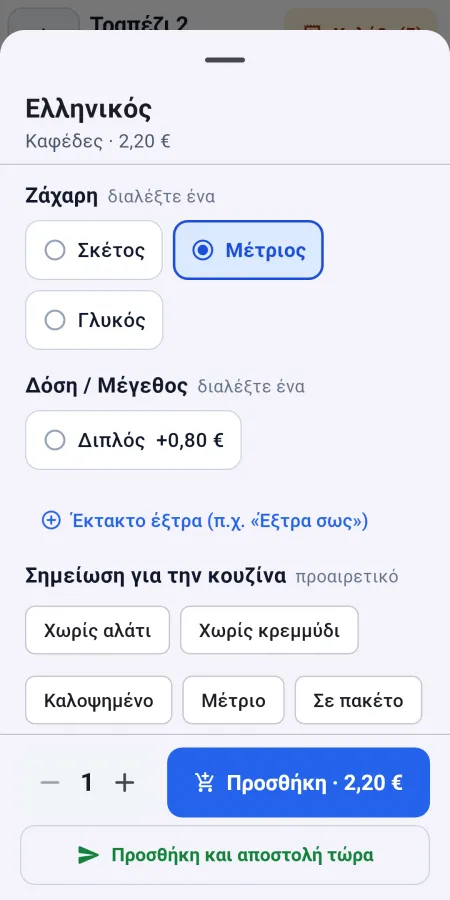
A café or grill menu is full of options. I organised them into three simple concepts, the same everywhere: ingredients the waiter removes with one tap (“No tomato”), single-choice groups (sugar, milk, doneness, size) and extras with a price.
Prices are always calculated by the till, never the phone, so the bill is correct whichever device took the order.
Support without a site visit
A restaurant system needs fast support, often during service. So, when the owner allows it, the till sends a snapshot of its state to the cloud every few minutes: menu, printers, devices, open tables.
From the admin panel I can run a test print, resend a stuck ticket or fix a price. The menu is edited like a spreadsheet, with paste from Excel, and reaches the shop as a single change. A copy is kept before every change for one-click rollback. Only specific, approved actions are allowed, and PIN codes are never shown.
Three names in one day, then Google Play
The product started as “OrderFlow”. On 19 October 2026 it got two new names on the same day, first “Coperto” and then Order Experts, as a sister brand of Copy Experts. Because the internal identifiers stayed the same, shops’ updates and data kept working normally.
On 20 October the closed test on Google Play was approved. The Windows app updates itself: it downloads the new version, checks the file is the right one and restarts, without touching orders or settings.
A restaurant system is judged when the Wi‑Fi drops
That’s why I designed for the worst network rather than the best, and why every action is safe to run twice: charging correctly is a matter of trust. The other thing I’ve kept is that nothing replaces a real restaurant. The kitchen ticket changed more in one day of service than in a week of design.
If you run a café, taverna or restaurant and want to see Order Experts in your own dining room, send me a message about a trial. The first conversation is free.
Found it useful? Share it
Keep reading
- AI wrote your app. Do you know what it forgot to tell you?I checked 105 public AI-built apps and the code mostly looked fine. The real risk is what doesn’t show: six things AI won’t tell you before you launch.
- 7 mistakes that drive customers away from your website (I see number 2 almost everywhere)Your website gets visits, but the phone doesn’t ring? The 7 mistakes I see most often on small business websites, and how to fix each one.
The project behind this article
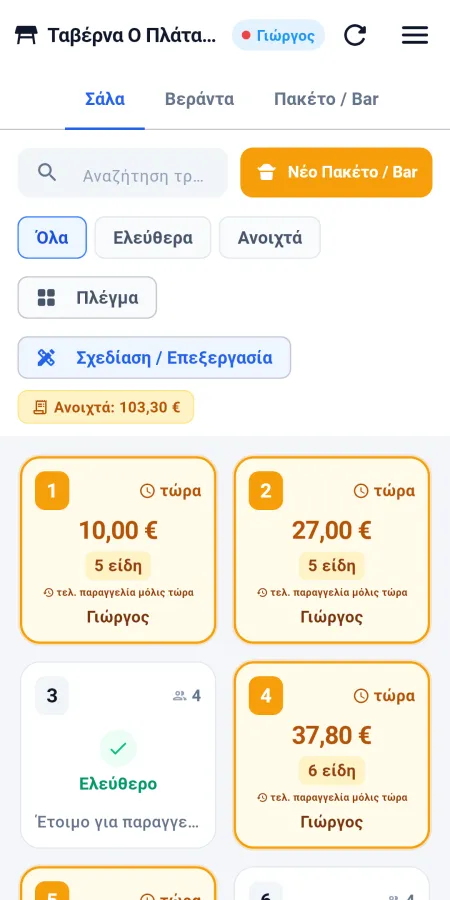
Wireless order-taking and till for cafés, tavernas and restaurants: waiters order from their phone and the kitchen prints instantly.